A perfect solution
- audreyharmse
- Jun 22, 2024
- 4 min read
Updated: May 13, 2025
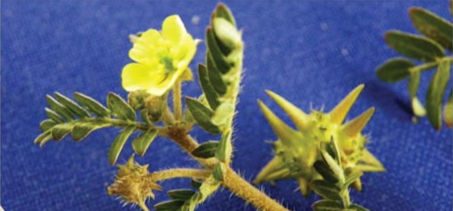
I grew up in South Africa during the 1980s. Our family home was in a quiet neighbourhood on the East Rand, Brakpan. A small park with the 1980s version of a playground was close to our house. A swing, a seesaw, and a roundabout. It could have been more aesthetically appealing, but we loved it.
We loved running around barefoot, as you did growing up in the 1980s. That was all good and well until you came to the park. The playground was in the middle of the park, the shape and size of a school oval.
The park was covered in grass, and a very thorny devil grew between the grass. The Afrikaans term for this little thorn is 'duwweltjie', which could be a derivative of 'duiweltjie', meaning small devil. Walking over these little thorns was torture, and no matter how carefully you walked, somehow, by the time you reached the swings, you would have a thorn or two in the soles of your feet. I can hear my Aussie friends groan, "Why didn't your parents make you wear shoes when you ran outside?" Who knows? It was the 1980s, and life was different then.
We loved the playground, but we hated the thorns. However, it didn't stop us from going to the park.
Today, as I was musing over the topics of forgiveness, reconciliation and atonement, themes that we hear so much about in Christian circles, the Holy Spirit showed me an interesting connection between reconciliation and the park from my youth. Let's dive in…
God presented Christ as a sacrifice of atonement, through the shedding of his blood—to be received by faith. Romans 3:25 (NIV)
This verse in Romans 3 is a familiar verse to many Christians. However, the word atonement used in this verse is translated differently in other translations. The King James Version uses the term propitiation. I wasn't familiar with this term until I started my study around this topic. My first thought when I read the word propitiation was that I'm glad the NIV translators used an easier-to-remember word like atonement.
The word used in the original Greek text is hilastérion. The definition of the word, according to Biblehub.com, is (a) a sin offering, by which the wrath of the deity shall be appeased; a means of propitiation; (b) the covering of the ark, which was sprinkled with the atoning blood on the Day of Atonement.
So, through Romans 3:25, Paul refers to the mercy seat or atonement cover Moses had to place over the Ark of the Covenant, according to Exodus 25. The mercy seat was where the priest would offer the sacrifice of atonement for the Israelite nation.
Once a year, the Israelites would celebrate the Day of Atonement or Yom Kippur. The meaning of the word atonement or Kippur in Hebrew means to cover sin (specifically like with bitumen).
So, our Heaven Father, in His great love for us, covered our sins like when you would cover an area with bitumen. The stuff we used to put on boats to make them waterproof, and nowadays, we cover roads with bitumen. We all know how strong a tar road is; nothing can grow through it, and you can't see anything underneath it.
Did God then love us because we have accepted the sacrifice of Jesus for our sins? Jesus said in John 3:16 that God so loved the world that He gave His only Son… That means that God loved us long before the sacrifice; it was because He loved us that He planned this perfect solution.
Another way of explaining the word atonement is 'at-one-ment', combining two things and making them one. We know from scripture that because of the sinful nature that we were born with, we could not be one with God. However, instead of God demanding appeasement efforts from us, He became the atonement sacrifice, once and for all.
Thus, through the atoning sacrifice of Jesus, we are reconciled with God.
How does this tie in with the park's story with the thorny devils? We loved going to the park, but we hated the thorns. We needed the municipality to cover the park grounds with something that would not allow the thorny plants to continue growing. It would have been useless to continually weed out the plants because these little plants are very invasive. So, just as our park needed something to cover the thorny devils, our sinful lives required to be covered with a once-for-all-time covering.
Paul puts it very concisely in Romans 5:10&11
For if, while we were God's enemies, we were reconciled to him through the death of his Son, how much more, having been reconciled, shall we be saved through his life! 11 Not only is this so, but we also boast in God through our Lord Jesus Christ, through whom we have now received reconciliation.
What should our response be in light of this incredible gift? Paul writes in 2 Corinthians 5:18 that because we have been reconciled to God, we are now tasked with helping others reconcile with God.
All this is from God, who reconciled us to himself through Christ and gave us the ministry of reconciliation 2 Corinthians 5:18 (NIV)
A vital place to start with our ministry of reconciliation is to reconcile with those who have hurt us in the past. If you cannot forgive another person, you have forgotten what you have been forgiven for.
We can all be eternally grateful for what God has done through Jesus to reconcile us with Him, but let's not stop there. Let us put our own ministry of reconciliation into practice. tion into action.


Comments